Aggregate Node – Introduction
You can group the table with the selected columns. You can also select the aggregation criteria, the output and can also filter the output.
Step 1: Once data is imported, click on transformation.
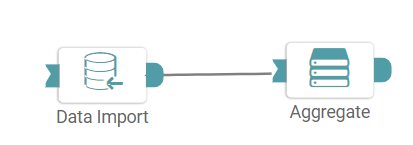
Step 2: Drag and drop the aggregate node onto the main screen. Connect the two nodes. (Refer to the image below).
Step 3: Columns can be filtered on various options available. The aggregation criteria, output and filter for the output can be applied. (Refer to the image below).
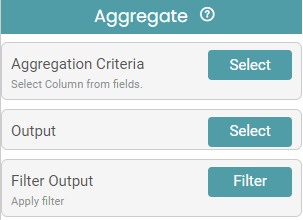
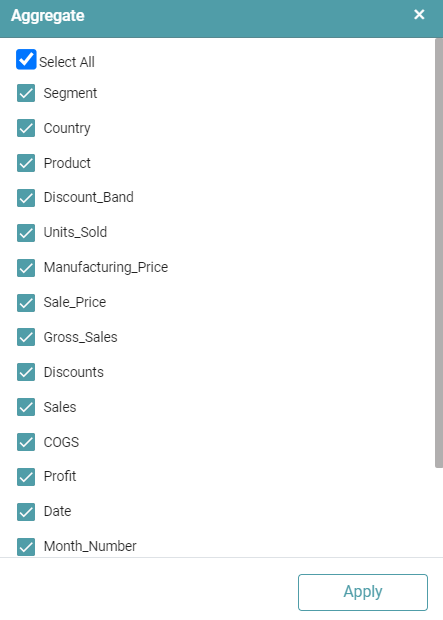
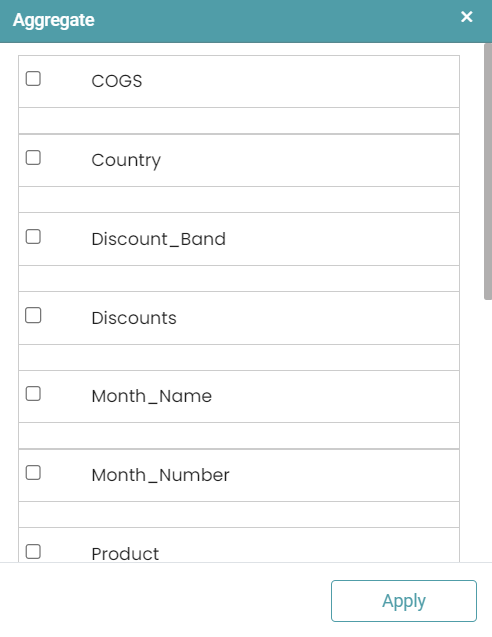
Step 4: Click on the select button from ‘Aggregation Criteria’. A pop-up appears where the user can select the columns required. Click on ‘Apply’ (Refer to the image below).
Step 5: Click on ‘Output’ and select the columns that need to be filtered from the pop-up that appears. Click on ‘Apply’. (Refer to the image below).
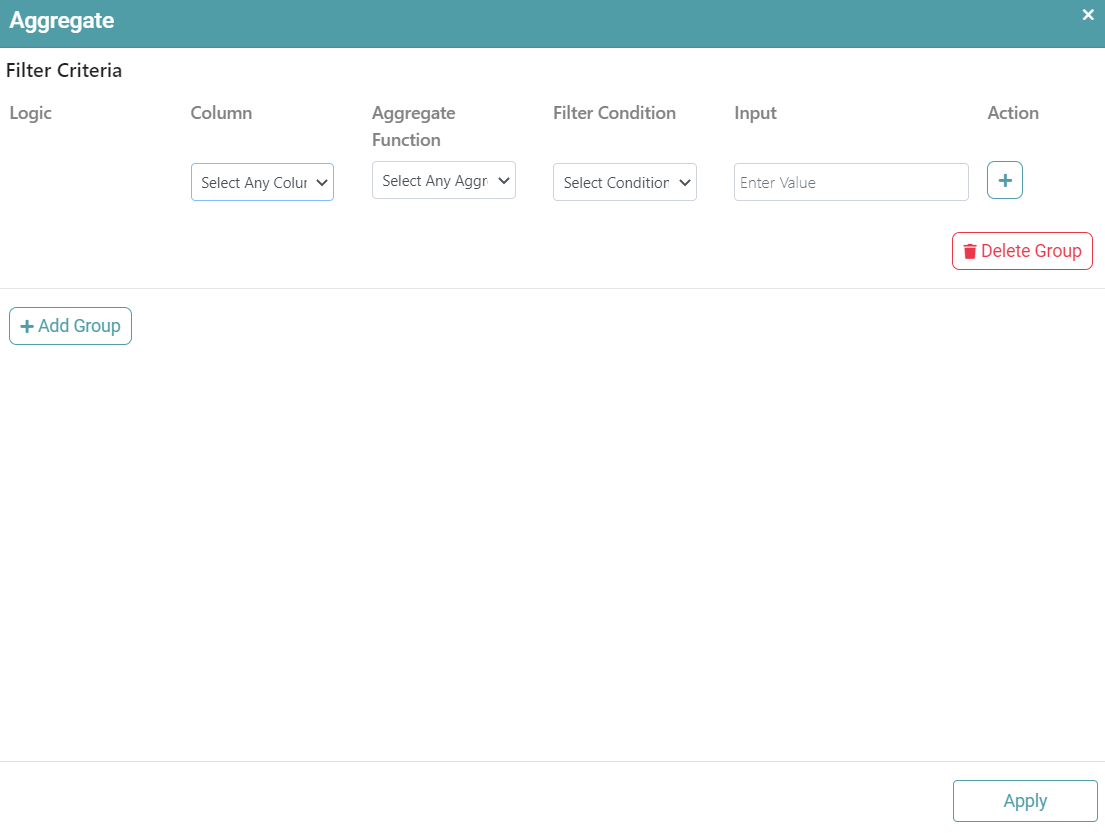
Step 6: Now, click on the filter button to apply ‘Filter Output’. You can select the column, aggregate function, give filter condition and input. You will be able to perform multiple actions. Once the necessary operations have been done, click on ‘Apply’. (Refer to the image below).


Step 7: Once the columns and the operations that need to be performed have been selected, click on the run button to run the workflow. Click on the “Show Results” on the bottom line to view the result.
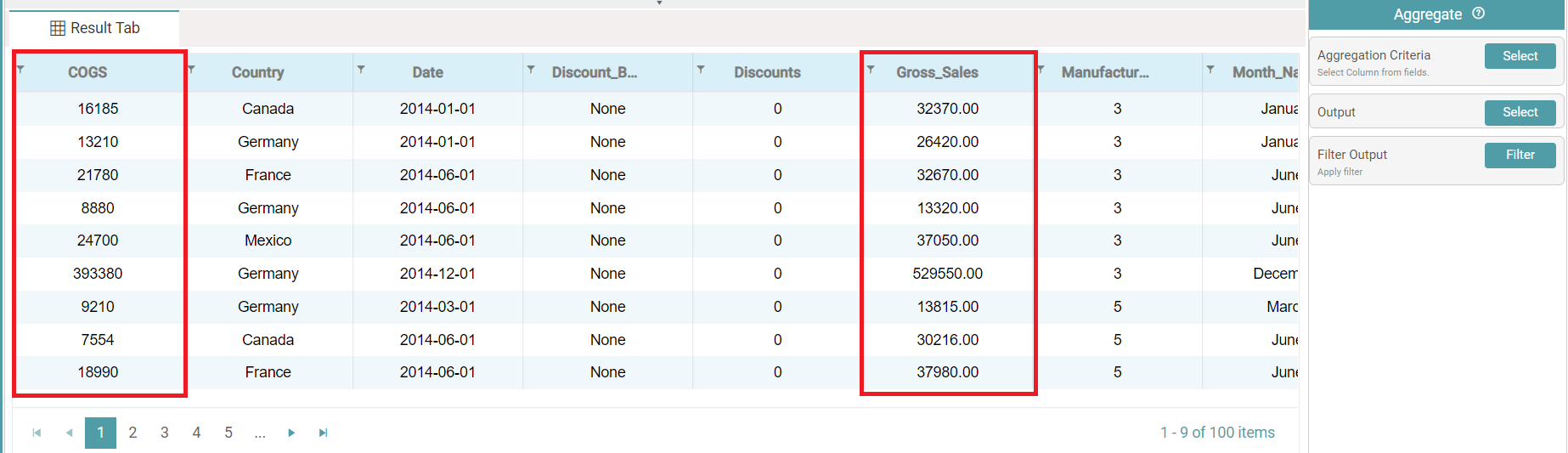
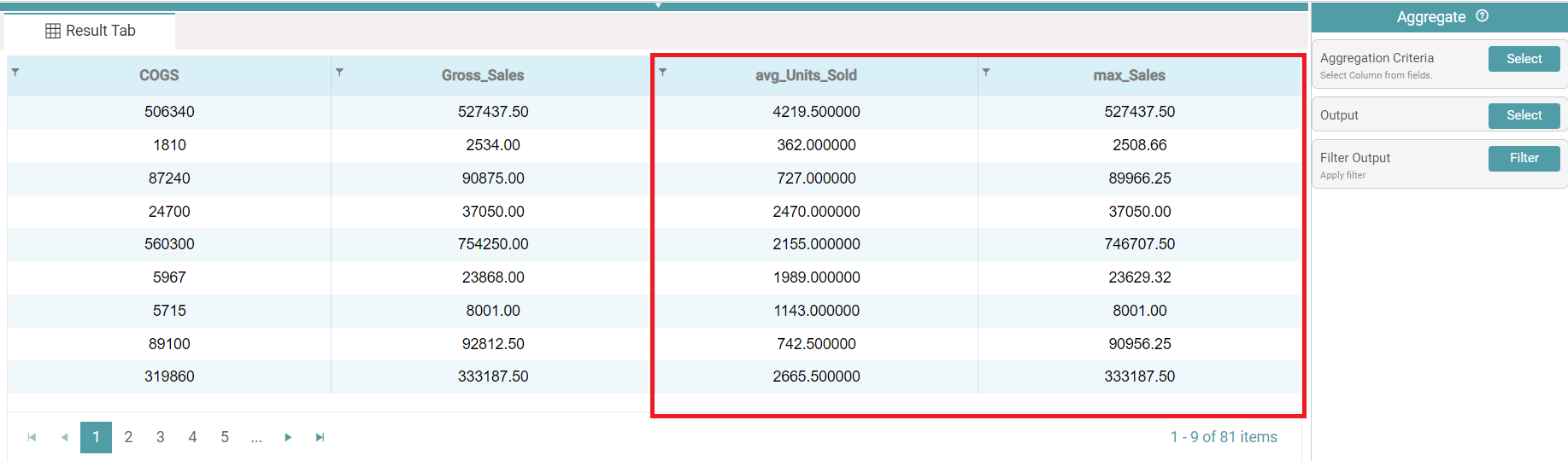
Step 8: The images of the before and after has been given below. The Columns selected to be transformed are “COGS” and “Gross Sales”.
Step 9: The data is reflected based on the operations selected. (Refer to the images below).
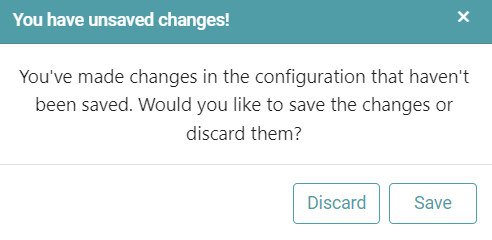
Note: After configuring a node, ensure you click “Save” to retain the changes. If you need to undo the configuration, click “Discard.” Failing to choose either “Save” or “Discard” will trigger a warning pop-up. (Refer to the image below).